
Material Moments from NeoCon 2026: Color, Texture, Comfort, and Connection
June, 29 2026 | 5 min read
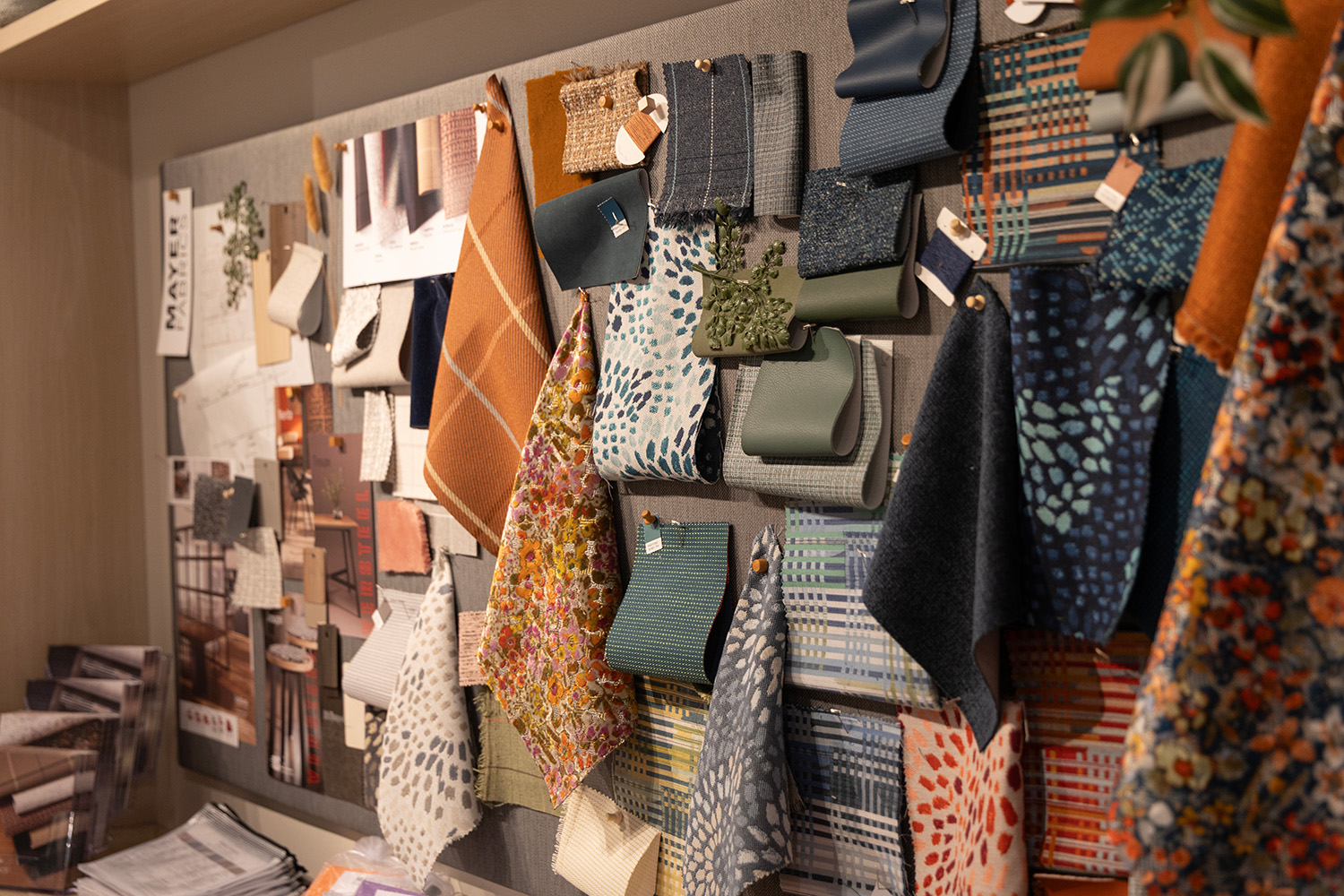
Across showrooms, we saw a continued shift away from purely minimal, clinical environments and toward spaces layered with color, texture, pattern, and material storytelling. Seating felt softer. Palettes appeared richer. Textiles played a larger role in defining not only how furniture looked but also how a space was experienced.
For Mayer Fabrics, this year was especially meaningful. Our new 3rd-floor showroom gave visitors a fresh way to experience our latest materials and product stories, while our longtime 11th-floor showroom offered another opportunity to connect with the relationships and partnerships that have molded our NeoCon presence over the years.
Beyond our own showrooms, we were proud to see Mayer Fabrics featured throughout partner spaces across The Mart. From lounge seating and chairs to healthcare, workplace, and hospitality-inspired applications, these installations reflected many of the design concepts that continue to shape commercial interiors: residential comfort, tactile texture, expressive color, biophilic influence, and performance-driven material innovation.
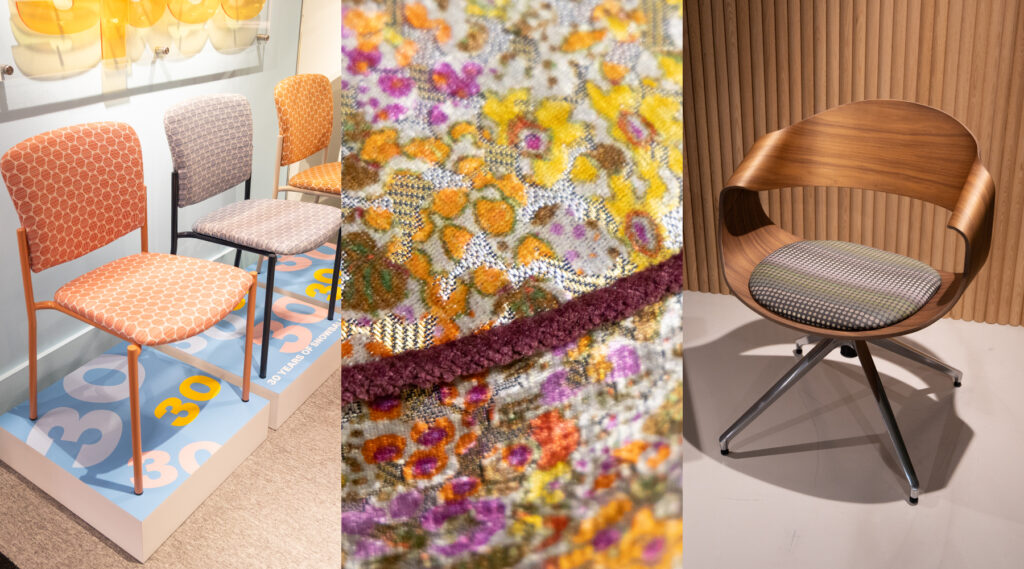
Featured Patterns: Centric, Veridian, and Focus.
Softened Spaces, Strengthened Performance
One of the clearest concepts we saw across NeoCon was the continued blending and inspiration of residential comfort with commercial performance. Lounge chairs, sofas, and different types of office seating felt softer, warmer, and more layered than traditional contract spaces of the past.
This shift matters because people are experiencing commercial interiors differently. In workplace environments, softer seating can help create areas for focus, informal meetings, or moments of pause. In hospitality, it can make a space feel more memorable and emotionally connected. In healthcare and senior living, comfort-driven textiles can help reduce the feeling of a clinical environment while still supporting durability, cleanability, and long-term use.
Mayer Fabrics helped elevate these pieces by adding tactile depth, color, and visual softness. A chair, sofa, or bench may be simple in form, but the right upholstery can change the entire feeling of the piece by helping it feel more welcoming, more intentional, and more connected to the story of the space.
Texture as the Experience
Texture was everywhere at NeoCon, but not always in loud or obvious ways. Some of the most impactful applications came across subtle dimensions: plush velvets, woven surfaces, tactile ribs, and layered upholstery combinations.
In commercial interiors, texture does more than add visual interest. It creates a sensory cue. It can make a waiting area feel calmer, a workplace lounge feel more inviting, or a hospitality setting feel more elevated. Even within settings where color needs to stay restrained, texture gives designers another way to add depth and personality.
This was especially clear on partner furniture, where Mayer Fabrics helped transform silhouettes into more elevated pieces. A task chair or lounge seat can become more memorable when the upholstery introduces movement, softness, or dimension.
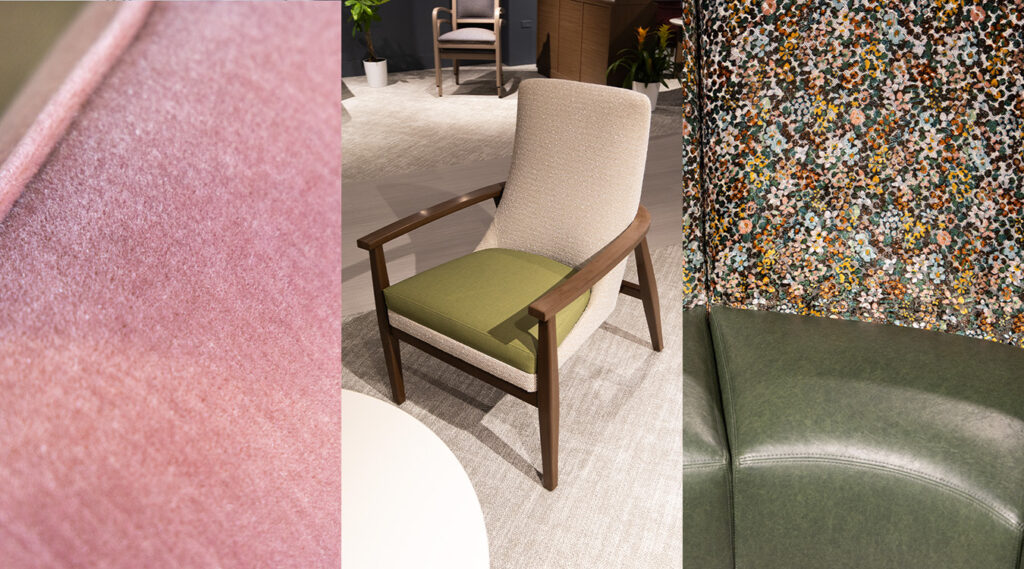
Featured Patterns: Posh, Note/Tellus, and Veridian/Cosmos.
Color with Purpose: Moody, Warm, and Expressive
Color at NeoCon felt rich, grounded, and expressive, reinforcing predictions for 2026. We saw warm rusts, deep burgundies, saturated blues, mossy greens, golden yellows, and softer blush tones used across seating, walls, and display environments.
These colors aren’t just decorative choices. They represent a mood and help define how a design is experienced. Burgundy and deep red tones can produce a sense of warmth, depth, and class. Earthy greens and soft neutrals can support a calmer, more grounded environment. Mustard, coral, and terracotta tones can bring energy and cheerfulness without feeling overly bright.
For commercial spaces, this color strategy allows designers to create identity and emotion while continuing a refined, purposeful atmosphere. In workplace and education settings, color can help define zones and support wayfinding. In hospitality, it can reinforce a brand’s story. In healthcare and senior living, warmer palettes can soften the environment and make spaces feel less institutional.
Elevated Biophilia and Nature-Integrated Design
Biophilic design has also kept evolving beyond literal greenery. Across partner spaces, we saw botanical patterns, curved silhouettes, natural wood finishes, earthy color palettes, and organic textures used together to create a more grounded experience.
For upholstery, nature-inspired design can bring softness and movement to pieces that may otherwise feel highly functional. A botanical pattern can make the product feel more connected to wellness and comfort. Organic textures and greens can support a calmer visual tempo, while warm wood tones and woven fabrics add a sense of familiarity.
This is especially important in healthcare, senior living, education, and workplace settings, where the design of a space can influence how people feel while they wait, gather, learn, recover, or work.
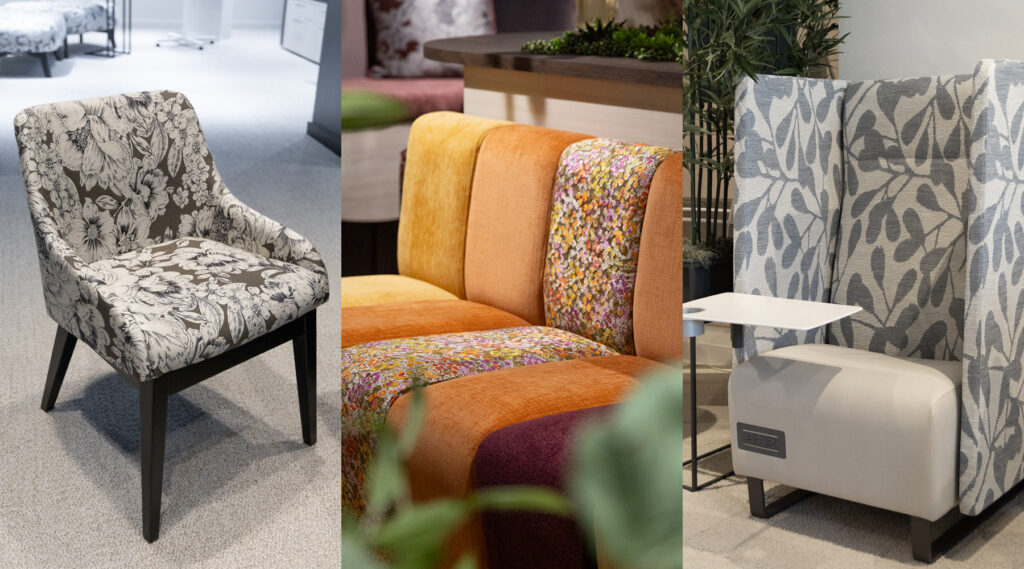
Featured Patterns: Bloom, Channel/Haven/Veridian/Rhythm, and Tulum
Pattern That Gives Furniture a Point of View
Another takeaway from NeoCon was the role pattern plays in giving furniture a stronger point of view. In many commercial settings, the furniture itself may need to stay simple for function, flexibility, or durability. Upholstery is where designers can bring in personality.
A patterned seat cushion, a textured back panel, a bold pillow, or a mixed-material application can elevate a piece’s presence. On an office chair, a pattern can add energy without dominating the space. On lounge furniture, it can create a layered, hospitality-inspired look that feels curated rather than standard.
This is where fabric becomes more than a finish and is part of the furniture’s identity.
Sustainability and Material Storytelling
Sustainability was also a meaningful part of our NeoCon conversation, especially as designers continue looking for materials that support both environmental responsibility and real-world performance.
Through our preview of the upcoming Origin Collection, our team explored sustainability as more than a product feature. It became part of the larger design story by connecting recycled materials, biodegradable innovation, organic inspiration, and commercial durability.
In today’s interiors, sustainable textiles need to do more than check a box. They must support cleanability, longevity, comfort, and visual impact across high-use spaces. When paired with thoughtful color, texture, and pattern, these materials can help designers create environments that feel grounded, intentional, and connected to the people who use them.
For Mayer, sustainability is not separate from aesthetics or performance. It is part of how we continue to develop materials that help shape more thoughtful commercial spaces.
NeoCon is always a moment to see what is next, but this year similarly reinforced something we continue to believe: fabric plays a powerful part in shaping a space’s experience.
The right textile can soften a commercial environment, bring energy to a simple silhouette, support a brand story, or make a high-use piece feel more welcoming and personal. As commercial interiors continue to become warmer, more flexible, and more human-centered, upholstery will remain an essential part of how those spaces connect with the people who use them.
At Mayer Fabrics, we are proud to partner with manufacturers and designers who use textiles not only as a finishing detail but also as a meaningful part of the design experience.